Tuesday, November 13, 2007

Is There Anybody Out There?

According to Derek Gordon, VP for marketing for Technorati, there are 109.2 million blogs out there, and 99 percent get no hits in the course of a year. "The vast majority of blogs exist in a state of total or near-total obscurity," said Gordon. Gosh. I know I have at least 4 regular readers, so I'm feeling special today. Technorati is search engine that tracks worldwide weblogs on a level with the almighty Google. This interesting fact, along with a few others, was reported in the Chicago Tribune today. Other stats:

- 5-15 percent of blogs are 'splogs', spam blogs designed to lure folks into sites with nefarious motives, spyware and general garbage. 3,000 to 7,000 new splogs are created each day.

- 109.2 million blogs means there is one blog for every 151 people on the planet, and roughly one blog for every 23 people that have Internet access.

When you can set up a blog in 5 minutes, write whatever you want anonymously and publish it worldwide in one second, this was bound to happen. Wasn't it Nostradamus who predicted computers would lead to the downfall of society?

Labels:

Thursday, September 13, 2007

All the world's a stage, but what's with the chickens?

“Plus ca change, plus c'est la meme chose.” The more that things change, the more they stay the same, sang Geddy Lee in the 1978 tune Circumstances. In April, 1980 I saw Rush at the International Amphitheatre in Chicago. Dry ice, lasers, bursts of flame and a bombastic trio of Canadian rockers. Last Saturday night, I did almost exactly the same thing, only at an outdoor venue and with my 12-year old son. It was a little surreal, hanging out before the show, me with a beer, my son with a large Mountain Dew, checking out the Loop rock girls and the general goings on. Souvenirs have gone from $10 cheap black T-shirts with 2 pounds of glitter (remember those?) to $75 tour jerseys. There were quite a few young kids with their parents; otherwise, not much has changed. It’s the long lines, wafting smoke, the pre-show anticipation, and the collective roar when the lights go down, and it still thrills me today. I thought back to my first big rock show (Boston, at the Chicago Stadium, 1977) and hoped my son felt the same way. I realize that the window for us to share rock concerts will quickly close because it’s not cool to be seen at a show with your old man, but until he can drive, there might be a few more in our future.

As for the band, they were incredible. They played for nearly three hours with only a short break, jamming ferociously, with tight musicianship. It’s great to watch a band that still really enjoys what they do. They would hunker down in front of Peart’s drum kit and smile to one another as they worked out their complex tunes. After 33 years, you can immediately see that it’s still fun for them, and that’s what matters.

And what about those chickens? Rush has always had humorous side, able to poke a little fun at themselves in the midst of the philosophical lyrics and prog-rock bombast. On one side of the stage behind Alex Lifeson were the obligatory Marshall stack amplifiers. Behind Geddy Lee were three ovens of the same height as the amps, containing rotisserie chickens. Occasionally, a chef would come out and tend to the chickens during the music. Why? Why not? We were also treated to little video snippets during set, including the South Park dudes trying to play Tom Sawyer, and an over-the-top drum solo with a rotating drum set and a ridiculous number of percussion instruments (actually, this was serious, and Neil Peart is amazing). All in all, a splendid time was had by all, and for $17.00, less then I’ve paid for parking at some other recent shows.

Here’s a blast from the past – Bastille Day, from the classic double live album All the World’s A Stage, 1976. Rock on!

Labels: ,

Saturday, June 30, 2007

Problems with the King's list, part 2

Picking up where I left off in the last post, I’m here to skewer Stephen King’s top 10 of his 25 greatest rock songs. We are talking about the top 10 of all time, and folks, there’s some pretty obscure stuff here:

10. A Big Hunk O Love – Elvis Presley
SK - Almost eclipsed by Elvis' screaming vocal is the rock era's best barrelhouse piano.
WM –Totally absent from SK’s top 25 is anything by the Killer, Jerry Lee Lewis. It’s easy to put Elvis in this list, but if you’re talking about piano, let’s get serious.

9. Bip Bop Boom – Mickey Hawks
SK – Under two minutes and still the greatest rockabilly record ever made.
WM – Couldn't find this one, so I reserve judgement.

8. Let’s Have A Party – Wanda Jackson
SK - That raspy, frantic vocal has never been equaled. Ms. Jackson makes Beyoncé look like Britney.
WM – A good song, but not all-time great material.

7. New Orleans – Gary U.S. Bonds
SK - Terrific recorded-in-a-bathroom reverb, insanely danceable backbeat.
WM – Again, one of the all-time greatest? I think not. You want to talk about reverb and timelessness, the answer is Bully Holly.
6. Ramrod – Bruce Springsteen
SK - His cleanest, coolest, purest track. To quote Mr. Berry, his guitar rings like a bell.
WM – It’s got that simplicity that seems to be a consistent theme in this list, but for my money, I’d pick Candy’s Room.

5. C’mon Everybody – Eddie Cochran
SK- The apocalyptic call of the teenage male: Dude, let's party. And screw the consequences.
WM – I approve. This is great rock and roll song.

4. Stupid Cupid – Connie Francis
SK - Don't argue; the vocal is hotter than a pistol, and it's the best clap track ever.
WM – I am losing my patience.

3. Mystery Dance – Elvis Costello

SK - It's 1:35, but how much angry, frustrated sex can you take?
WM – I love the idea that a British computer nerd can transform himself into a rock star (Elvis once said that he listened to the first Clash album for 12 hours straight, then wrote Watching the Detectives), but we are down to the nitty gritty here, and I don’t think EC rates nearly this high.

2. Burning Love – Elvis Presley
SK - He saved the best for last.
WM – This song doesn't have the raw urgency to rate number 2. A little over-produced, and over-rated since it’s the King’s last single. How could you pick this over Hound Dog or Jailhouse Rock?

1. Anarchy in the U.K. – The Sex Pistols
SK - This song still sums up what I love about rock & roll: anger and joy and urgency, all compressed into three and a half minutes of drums and buzz-saw guitar.
WM – This song belongs on this list, but number 1? I always thought the Pistols were a little over-rated.

As you can see I’ve got some issues with this list, and I imagine you do to. The omissions are upsetting, to say the least. It’s almost as if SK deliberately ignored ‘classic rock.’ I’m tired of a lot of it too, like Stairway To Heaven and Hotel California, but there’ so many essential songs he’s ignored. Off the top of my head, here are few songs that must be included (certainly over Connie Francis):

My Generation – The Who. “Hope I die before I get old.” A two chord riff, insolent lyrics and a timeless bass guitar break. What more can you say? Still sounds great today.

All Day and All of the Night – The Kinks. The birth of the power chord. Where would we be without it?

Good Times Bad Times – Led Zeppelin. The stop-start, syncopated heaviness that defined Zep is fully realized in one of their earliest and best tracks.

London Calling – The Clash. Omitting the Clash from this list is just plain wrong. This may be their best song.

Rumble – Link Wray. Snarling surf guitar from the master, circa 1958. So influential. When he died a few years ago, Dylan opened his sets with this song. Dylan!

White Rabbit – Jefferson Airplane. I love this way this song builds to its climax. The key song for the Summer of Love. Feed Your Head!

Paranoid – Black Sabbath. Heavy metal perfection.

Cretin Hop – The Ramones. Nobody has done three-chord rock better.

Hush – Deep Purple. I think this might be a cover, but the power of this band and Ian Lord's Hammond organ is thrilling. Listen


We're An American Band - Grand Funk Railroad. The best of 70's rock. A celebration of groupies, strippers, gambling and hotel trashing.

Light My Fire – The Doors – I have a bootleg of some early Doors demo tapes circa 1965 where they sound like a bad Animals cover band. Somehow they completely transformed by 1967, with the addition of the carousel keyboards and Morrison’s mystic poetry. It's sheer magic. This song will sound great 100 years from now.

That’s enough; I could go on and on. As always, your comments (that includes you too, Steve) are welcome.

Enjoy some audio and video of Steve’s list

Labels:

Tuesday, June 26, 2007

The King's List: A Rebuttal


Well, it’s been quite a while since I’ve posted anything. So much for my tag line, “....by a guy with just enough time on his hands.” Lately, it’s been zero free time. I’ve been planning to respond to Stephen King’s recently posted list of the 25 greatest rock songs of all time, which is at least a month old, and has probably been criticized and analyzed to death by now. King is one of my favorite writers, and I enjoy the fact that’s he’s not too literate and self-conscious to write about pop culture in EW, one of the most mainstream magazines on the rack. List making is one of the lowest forms of publishing, one that countless British music mags resort to on a monthly basis. The ‘list’ is an easy way to satisfy our collective attention span that has slowly dwindled to nothing more that a two-sentence blurb per topic. The ‘list’ of course is also designed to incite disagreement, dissention and occasional violence (and some entertaining letters to the editor). I can’t help but think that King is baiting us, as some of his choices are puzzling. There are some glaring omissions here, and a least one positively insane entry. Of course, every song could be disputed, but I do agree with a few.

A list of this nature will be unique to each individual, and for me it would probably change depending on my mood. To make this list, the song must define the essence of rock music: Rebellion, angst, raw energy, and the celebration of youth and all its incarnations. These songs must offer something with repeated listening. Here’s King’s list, along with my commentary:

25. Psychotic Reaction – The Count Five
SK: “Garage rock as it was meant to be." WM: Ok, he’s off to a good start with this one. There are dozens of garage rock gems that could go here, but very few better. Louie, Louie is too predictable, and we’re all sick of it. Listen

24. In-A-Gadda-Da-Vida – Iron Butterfly
SK: "Only the long version counts."
WM: Maybe it makes the top 25 heavy riffs of all time, but this song gets dull, fast. Didya know the title is a drug induced slur of In the Garden of Eden?

23. Dead Flowers – Rolling Stones
SK – "Their best country-rock fusion."
WM – Ok….. but is it rock? I’d pick Jumpin’ Jack Flash. I can listen to that one over and over. Remember Michael Keaton in his pimpmobile in ‘Night Shift’? That rocks.

22. Needles And Pins – The Searchers
SK – "The epitome of folk-rock."
WM – By definition, folk-rock should not appear on this list. Anyway, the epitome of folk-rock is ‘So You Want to Be a Rock and Roll Star’, by the Byrds.

21. I Get Around – The Beach Boys
SK – "Has stood the test of time."
WM – I agree. Maybe the best upbeat song the Beach Boys did, and that’s saying a lot.

20. On The Dark Side – John Cafferty and the Beaver Brown Band
SK – "Still smokin’ after all these years. Simple and cool."
WM – Wha? Steve, you lost me with this one. Not even in the top 100.

19. You Can Never Tell – Chuck Berry
SK – "The whole story of love and marriage in 2:30."
WM – You’ve got to include Chuck Berry, but I’d pick Maybelline or The Promised Land.

18. I Want To Help You Ann – The Lyres
SK - "The best stalker rock song ever."
WM – Never heard it. King has a few local Boston bands in his list. I’ll have to reserve judgment until I find it.

17. Long Cool Woman in a Black Dress – The Hollies
SK – "Should get old but somehow never does."
WM – I agree. I loved this song the first time I heard it. Still do. The most basic of riffs, maybe that’s why it works.

16. Don’t Be Cruel – Elvis Presley
SK – "Total bebop testifying."
WM – A certifiable classic, but I prefer I Want You, I Need You, I Love You.

15. Ain’t No Fun (Waiting Round to Be A Millionaire) – AC/DC
SK – "The quintessential hook, played over and over."
WM – SK, you just described nearly every AC/DC song. Why not Shot Down In Flames, a timeless tale if there ever was one?

14. Sixty Minute Man – The Dominoes
SK – Basic dirty boogie boasting."
WM – "True, but I’m finding it hard to call this rock. This is the tune from the bedroom/bathtub scene in Bull Durham, for the doo-wop challenged.

13. Mass. Ave. – Willie Alexander
SK – "Boston punk at it’s best."
WM – Never heard it. Might be fantastic, but does it belong on a list with Chuck and Elvis?

12. The Girl Can’t Help It – Little Richard
SK – "Can you imagine this guy on American Idol?"
WM – Dylan said rock and roll died with Little Richard’s last hit in 1957. Any of his stuff belongs here.

11. She Loves You – The Beatles
SK – "The best Beatles song because it gets in, does its business and gets out."
WM – Hmmm. I Saw Here Standing There, for the same reason, but a better song, IMO.

Next post, the top ten, and boy are there some problems.

Labels:

Thursday, April 05, 2007

Once upon a time, radio was a free avenue to great new music. Not the Top 40 AM stations that repeated the same playlist incessantly, but the edgy FM stations that played the music I wanted to hear, even if I didn’t realize it at that moment. Today, most FM stations are wastelands of programmed repetition. In order to find new artists and true alternatives, one must seek out the occasional hourly program on Sunday nights, or seek out low-wattage college radio. This is precisely why I’ve embraced streaming audio through alternative FM stations nationwide, and the various playlist web-sites like Finetune and Pandora that I’ve previously discussed. Virtually all of the music I’ve purchased last year by new artists (or at least new to me) I’ve discovered in this manner. Now, the Copyright Royalty Board is proposing drastic modifications to the royalty system for streaming audio that threatens to extinguish the entire premise of free on-line radio. This pisses me off. I’m willing to endure a few ads on the music sites I frequent, but according to a recent article in the Chicago Tribune, the income from these ads will barely scratch the surface.

Basically, the old royalty system provides for a percentage of a station’s revenue, in the area of 12 percent. The revised system accounts for a per song, per listener fee, which would translate to at least a ten-fold increase in royalties for most stations. For Pandora, which operates by allowing users to create their own ‘channels’, the system mandates a $500 minimum per channel, resulting in a $3.5 billion fee, based on it’s 6 million users. Obviously this would render Pandora not economically viable.

Although many in the industry believe that a compromise will be reached, it seems likely that big changes are near. For more information, I urge you to check Bill Goldsmith's blog at Radio Paradise.

Labels: ,

Thursday, March 01, 2007

Green Thoughts - Lose the Bottle

For the most part I will refrain from using this blog for preachy diatribes, but I am compelled to remind readers of an ongoing problem. Our addiction to bottled water has reached epidemic proportions, and the senselessness of it all is casually overlooked on a daily basis. Newsday recently reported that bottled water is an $11 billion industry, and at least 25 percent of it is nothing more than filtered tap water. Why stock your fridge with bottled water at about $7 per gallon? The average cost of a gallon of tap water in the US is about $2 for 1,000 gallons.

Environmentally, the impact of bottle fabrication, packaging, the excessive use of fossil fuels in shipping (sometimes great distances), energy used in refrigeration and the countless numbers of bottles that end up in landfills despite our heightened recycling efforts is all damaging and irresponsible. The bottled water industry generates 1.5 million tons of polluting plastics each year. Moving large quantities of fresh water from its place of origin contributes to freshwater depletion. Indeed, 25 percent of all water bottled and traded is consumed outside its country of origin. The Earth Policy Institute estimates that making bottles to meet the US demand for bottled water requires more than 1.5 million barrels of oil annually, enough to fuel 100,000 cars for a year.

And the health benefits of bottled water appear to be overstated, as recent studies have shown similar levels of bacteria and impurities as tap water. Consider these published facts:

In one study, published in The Archives of Family Medicine, researchers compared bottled water with tap water from Cleveland, and found that nearly a quarter of the samples of bottled water had significantly higher levels of bacteria. (New York Times On-line 8-1-05)

Both bottled and tap water suffer from occasional contamination problems, but US water quality standards set by the Environmental Protection Agency for tap water are more stringent than the Food and Drug Administration’s standards for bottled water.
New York City tap water, for example, was tested 430,600 times during 2004 alone. (New York Times On-Line 8-1-05).
Many bottled water suppliers use filtration systems that remove fluoride, leading to an increase in cavities, according the American Dental Association.

I’m not suggesting we ban bottled water, only the consumption based on laziness, convenience and fashion. As I recall, it was celebrities and models that launched the fashionable trend of bottled water. I distinctly remember Sylvester Stallone years ago stating that he only drinks Evian (naïve spelled backwards, by the way). More recently, celebrities have been seen with premium Bling H20, priced at $35 per bottle. If it takes celebrities to guide the public mindset, then so be it. The solution is simple:

Get yourself a home filtration system and a refillable water bottle. Your cost per gallon just dropped about 97 percent and your environmental responsibility just skyrocketed. Think about it.

Further reading:


Recycling Failures
Dasani Disaster
The Purity Myth
Recycling Misconceptions
Bling Water

Labels: ,

Tuesday, November 21, 2006

What's wrong with this guitar?

Sometimes guitars earn as much recognition as the musicians that play them. Lucille is forever linked with B.B. King, a Gibson ES-355. There is Angus Young and his inseparable red Gibson GS, Townshend’s numbered Les Pauls in the 70’s and Bruce’s battle-worn Esquire/Telecaster. And then there’s Blackie, Clapton’s legendary Strat. Here’s a brief history:

In 1970, Clapton bought six Strats for $100 each at the Sho-Bud guitar shop in Nashville, Tennessee. He took them back to England and gave one to George Harrison, one to Steve Winwood and one to Pete Townshend. From the remaining three, Eric took the best components and assembled Blackie. Blackie was Eric’s primary stage and studio guitar between 1970 and 1985, making her debut at the Rainbow Concert on January 13, 1973. Blackie was retired in 1985 after years of service. Not only had she been in the studio for every album recorded during that time, she was used at such famous events as the ARMS benefit tour in 1983 and Live Aid. Blackie ventured out of retirement on two occasions while still in Eric’s ownership. The first was for a television commercial for Honda Cars Japan in 1990 at the company’s request. The second instance was for one number at the Royal Albert Hall in 1991.

In 2004, the guitar was purchased by the Guitar Center at auction for a record price of $959,000. Proceeds went to Eric’s Crossroads Centre Antigua, an alcohol and drug treatment center.

All fine and good, and a remarkable story. Now comes the news that the Fender Custom Shop has ‘faithfully recreated’ Blackie in 275 new guitars, to become available to the general public this Friday, the day after Thanksgiving (Black Friday in the merchandising world). A portion of the proceeds benefit the Crossroads Centre and the whole thing is done with the blessing of Eric, but ethically, this raises some questions.

In my business, which is the restoration of old buildings, we respect what is called the ‘patina of use,’ the worn marble steps, weathered edges and character lines that define old from new. We would never dream of artificially aging new construction to give the appearance of old (leave that to the theme parks), nor would we replace those gracefully worn marble steps with crisp new stone. Art museums are careful to preserve this same patina in works of art, and I believe the same respect should be given to artifacts such as guitars. The new models will have artificially worn tuning knobs, cigarette burns, fake nicks and even a worn neck to replicate years of Slowhand's handiwork. This is the same technique that shady art dealers use to pass off reproductions as valuable antiques, and although I’m sure the fake Blackies will be properly dated and identified, but the lines are a little too blurry for me. I'm not quite sure why a guitarist would want to own a guitar like this. And anyway, the new Strats will never sound like Eric’s old patchwork 1970 beauty, even if the player’s got the chops.

Just my opinion. As always comments are welcome.

Badge- Rainbow Concert 1-13-73

Buy Clapton

Labels:

Thursday, August 17, 2006

Death Cab In Lakeview

While the world reels from the developments in the JonBenet case, we have our own murder trial in Chicago that’s caught my attention. Here’s the scenario: On February 4, 2005 a man takes a short late night cab ride to an affluent residential area in Chicago. He is employed by the City of Chicago as a communications specialist for the Public Health Department. He is also apparently HIV positive, and to make things weirder, is named Michael Jackson. The fare is $8. During the cab ride, something happens. Tempers flare, and an argument ensues outside the man’s residence. Screaming turns to physical confrontation and during the scuffle the cab driver, Haroon Paryani, is thrown to the ground. The man flees the scene in the cab and runs over the cab driver, at least twice, before striking a parked car. The cab driver is killed.

As the trial began this week, Jackson claims his life was in danger the moment he entered the cab. Paryani drove erratically, verbally attacked his sexual orientation and religion and tried to strike him while driving when he questioned the route and the fare. When he refused to pay the fare, a fight ensued; Paryani threatened his life, he struck the driver in self defense, and tried to flee in the cab for his own safety, not realizing Paryani was in the way. Defense lawyers claim the driver had a history of belligerent behavior towards passengers. Several eyewitnesses describe the deliberate way in which Jackson entered the cab, accelerated and repeatedly ran over the driver. The prosecution of course paints Jackson as an enraged, drunken aggressor.

How things can go so awry in such a short time is amazing to me. An $8 cab ride can’t be more than 15 minutes. Yet, it was enough time for pure unadulterated rage to boil to the surface. “The state is suggesting that Jackson went from Dr. Jekyll to Mr. Hyde. On that day, Jackson got into Mr. Hyde’s cab,” says the defense lawyer. Jekyll and Hyde, Stephen King’s Christine reanimated as a taxi, or just plain old hatred, evil walks amongst us, even in Lakeview.

------------------------------------------------------------------------------------------------
More Raconteurs: A live version Gnarls Barkley's Crazy, Cleveland August 6. Not the best quality, if I find a better one I'll post it. More on Death Cab soon.

Labels:

Friday, June 16, 2006

Everywhere At Once

Another long pause between posts...my apologies to you faithful readers. Pretty hectic month, with an overload of work and personal obligations, so much in fact that it caused me to miss the Springsteen show near Chicago a few nights ago. Yikes. On the plus side, my daughter graduated with honors from middle school. Bruce will be back.

One of my favorite bands from the 80's has regrouped and played at a Irish pub in Chicago last night (missed that too). The Plimsouls are forever linked to the immortal movie Valley Girl, but the truth is they were a fantastic band, full of raw energy and more power pop hooks than they knew what to do with. Singer/leader Peter Case went on to pursue a solo career that explored his interest in folk and blues (I highly recommend his record Sings Like Hell). The Plimsouls studio records blistered with live energy; Everywhere At Once almost sounds like a live recording. The title song pretty much sums it up for me right now: Graduation ceremony? Springsteen show? Little league game?
Soccer game? Dance recital? Health club? Office? Home???

Listen:Everywhere At Once

Buy it


"That techo-rock you guys listen to is gutless." Randy (Nicholas Cage) in Valley Girl

Labels:

Friday, April 07, 2006

Smells Like Greed

I suppose it's inevitable, but I'm still dismayed when I see the shameless marketing of rock music (and dead musicians). I've seen the Hendrix action figure at Toys R Us, and of course I've seen the full catalog of merchandise the Dead camp offers. But an action figure of Kurt Cobain? Yes, folks, in case you haven't heard, it will be available soon. It's Kurt, rendered to look like he stepped out of the 'Smells Like Teen Spirit' video, complete with striped shirt and gym floor.


Do kids really want to put this on their bookshelves along with the McFarlane statues of Albert Pujols and Barry Bonds? It's very odd to me. Check out the hilarious press release, claiming that "the one thing that many fans have been asking for and have never received in ANY form, official or not, is an action figure." Huh?? I guess once you've got all of Nirvana's unreleased music and an exact published replica of Kurt personal journals, ya gotta complete the picture with the action figure. Now I wonder if a tattered, whorish Courtney Love doll is not far behind.

"...everything from toy guns that spark, to flesh-colored Christs that glow in the dark
It's easy to see without looking too far that not much is really sacred." -Dylan

Labels:

Thursday, March 16, 2006

South Michigan Avenue Blues

I'm back, faithful readers (or reader, as the case may be). For the first time, life has derailed my blog. Not to worry, though, as plenty of thoughts are racing through my head.

First off, thanks to Chris at localvertical, my new top referring link. Check it out.

A few weeks ago I pondered the transition of Millennium Park in Chicago from industrial railyard to urban oasis. The swift development of residential property in the Loop is a positive by-product. This trend towards downtown living does not end at Adams Street however. South Michigan Avenue is quickly becoming a canyon of newly constructed modern condominiums and loft conversions, and the impact on the urban fabric is significant. An infusion of residents into a blighted area is a good thing, but the number of smaller scale older buildings yielding to contemporary high-rises is alarming. If you haven't seen South Michigan Avenue in a while, you may not recognize it.

From the north, the parade of new condos is evident, as the streetscape is dotted with construction cranes and newly cleared lots. From the south, the massive expansion of McCormick Place is surely to spawn additional development. The result is a number of low-rise vintage buildings uncomfortably sandwiched by their new neighbors. The condos require off-street parking, resulting in several floors of bland parking garage architecture flanking the more pedestrian friendly low-rise commercial structures. How long these old buildings will survive is anyone's guess.


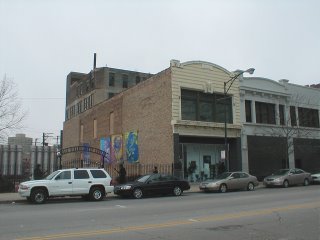
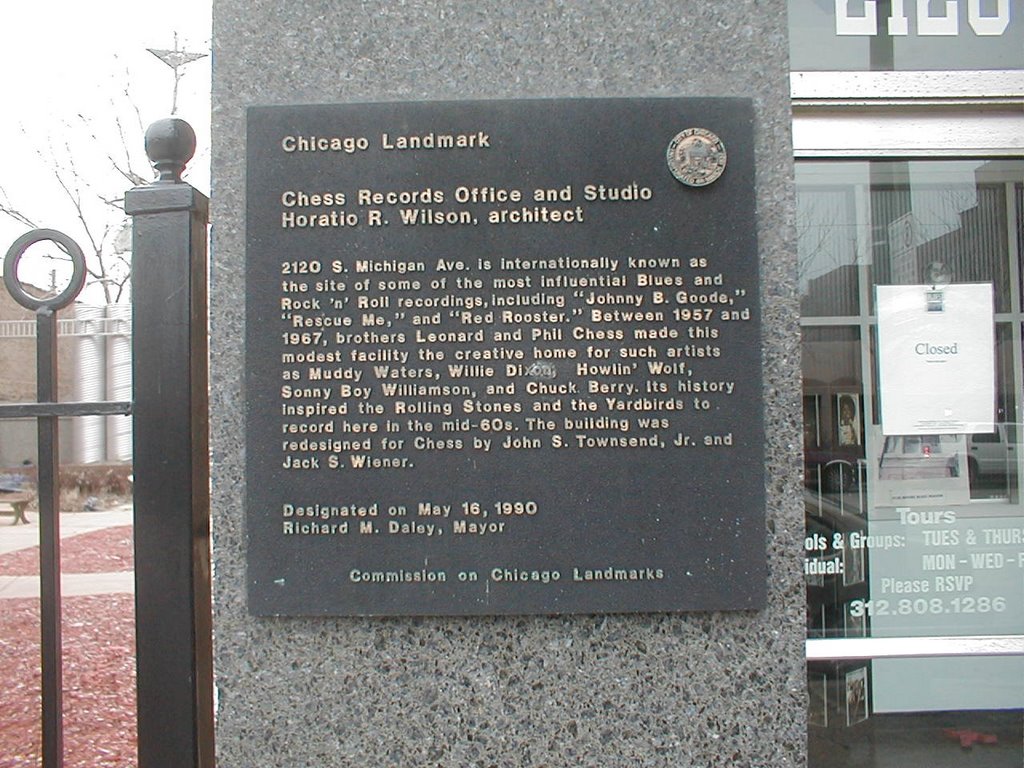
Stuck in the middle of this crush from north and south is the Chess Records Office and Studio, 2120 S. Michigan Avenue. This modest structure is of monumental significance in the history of music. The building served as a landing for the great African-American blues singers and a launching pad for a few scruffy English rockers in the mid 1960's. The building just may be at the crossroads of rock music as we know it. The building is landmarked and is probably protected from demolition (I say probably only because anything can happen in the Windy City). The context however, is in danger of irreversible change.

Change is good, but let's not cast a shadow over our past.

Listen: Hidden Charms by Howlin' Wolf, written by Willie Dixon

Buy it: Howlin' Wolf: His Best


Labels: , ,

Tuesday, February 21, 2006

Millennium Park circa 1950

One of my favorite web sites is Found Magazine, a site that collects random objects found by people; photographs, grocery lists, handwritten notes, whatever. It really gets your imagination working to think about the people in the photos, or what on earth was going through a person’s mind when they wrote that cryptic note (some of the items are downright bizarre). I don’t have a collection of such objects of my own (yet), but I do have a few items I've found that are worth sharing:


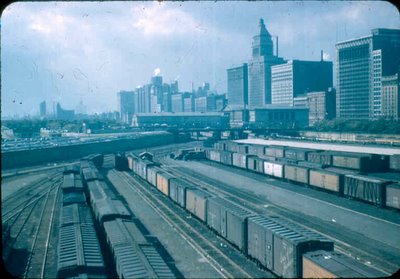
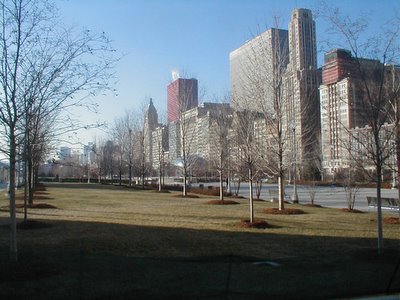
This photograph comes from a handful of slides found in my mother-in-law’s personal belongings and was probably taken in the early 1950’s, judging from the railroad cars in the photo. The view is looking south towards Michigan Avenue in Chicago at what is now Millennium Park. My guess is the shot was taken from the Randolph Street Bridge near the old Prudential Building. The Art Institute is in the background. As a kid, I remember looking at the trains from my father's office in the tall building in the photo (with the pyramid and beehive beacon on top). This is the equivalent of looking at Central Park from a high rise in New York and seeing locomotive and cattle cars.

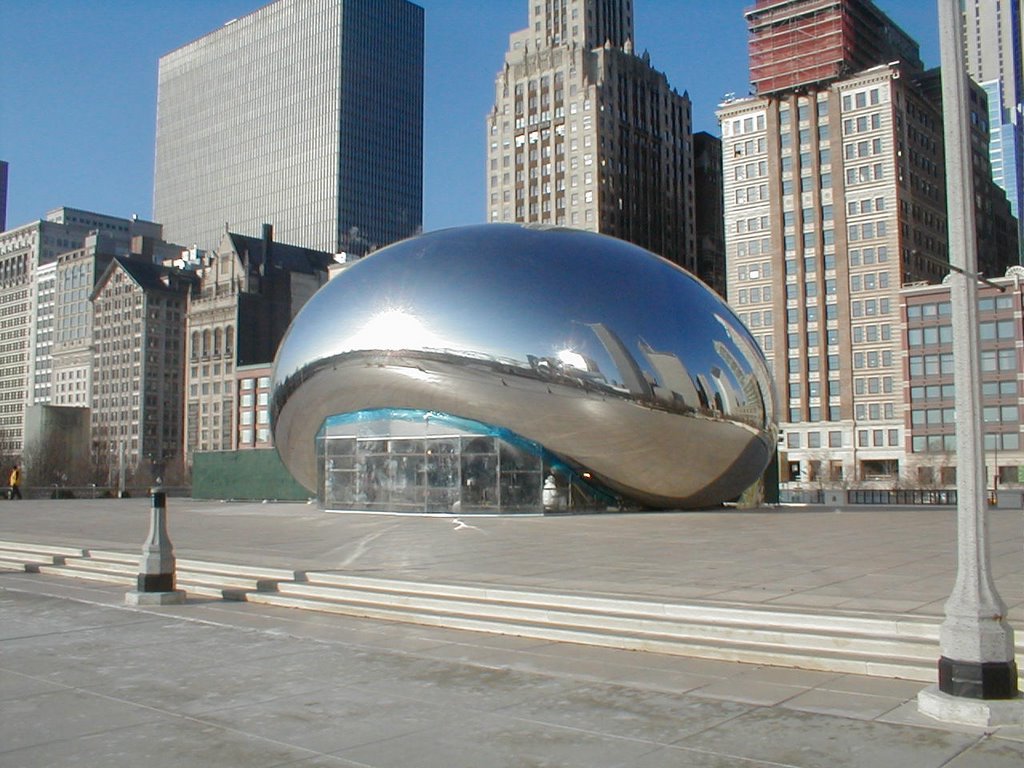
It’s hard to believe that for many years Chicago’s “front yard” was a tangled web of freight cars and railroad lines. Visitors and new residents are probably unaware of the industrial history of this site. The railroads were a huge contributor to the growth of Chicago, but this is a case where obscuring our history is probably a good thing. Today, the site contains the newly completed Millennium Park, complete with a Frank Gehry designed bandshell, landscaped promenades, ice rinks and a giant mirror polished kidney bean (see the Cloud Gate photo below). A few rails lines still run below, and a huge parking garage is constructed below the park, but the up on top, the transformation is remarkable. Millennium Park is directly responsible for the recent boom in residential property in the Loop. Here's what the site looks like today:


Polishing the Cloud Gate, 2-21-06. What a difference half a century makes. By the way, my father's office building went condo last year.

Labels: ,

Friday, February 17, 2006

Chicago Auto Show in review

Last weekend I took in the Chicago Auto Show with my 11-year-old son. The show is always a spectacle, where the common folk can come within a few feet of unattainable luxury automobiles and wow over the concept vehicles. I suppose a few people are actually there to shop for a new car, but mostly it’s a day in fantasyland for a bunch of car nuts. Any growing public interest in hybrid vehicles and energy efficiency is not in evidence here; this show is all about Detroit muscle and conspicuous consumption. Here are some highlights:

The buzz in the concept car category was the Nissan Urge, a nifty little sportster with the ability to transform into an Xbox 360 life size controller. With the push of a button the steering wheel and pedals become controllers, and a drop down screen provides the graphics. Presumably, you have to park the car to play. The Urge was one of the only concept cars that you could really get close to; the others were on roped off elevated pedestals. As you might guess, this was my son’s favorite. I thought it was humorous that the Urge had no slinky babe touting its features like the other concept cars. Instead, they ran a video with an engineer describing the design (the Urge must be targeted to the techno-geek).


The Urge interior. Not sure about the name..... This was not the only concept car with a steering wheel reminiscent of a airplane.


Dodge had the biggest presence of the major automakers at the show, highlighted by the concept Challenger, a throwback (almost a mimic) of the early 70’s styling the way Ford did with the Mustang last year. Shown in Competition Orange, this was a favorite. There’s also a bright yellow Charger with the vintage ‘Super Bee” graphics. With the demand for 1970’s muscle cars off the charts, it is no surprise Detroit is going retro. A local auto museum displayed a 1970 Plymouth Hemi Convertible, valued at $2.2 million. One of six known to exist, they turned down an offer of $4.6M. Chevy had a nice Camaro concept on display too.

The Challenger interior. I liked the two tone cockpit with the high tech blue colors emanating from the dash.


Too bad Pontiac blew it on the recently redesigned GTO last year. However, Pontiac has the best new production car in my opinion. Check out this bright red Solstice sportster, due for 2007.


The Hyundai Miev concept car reminded me of a life size Hot Wheel. I think that's a good thing.


The Ford Super Chief is an enormous "chopped" pick-up with tank like styling and small, sinister windows. The Super Chief and a concept van included adjustable seats that transform the rear into family room type seating (the van had a sectional sofa) with the obligatory drop down flat screen. To Ford's credit, this behemoth did feature a hybrid fuel system.

The crowd at the Ferrari/Maserati booth was impenetrable. People will still trample each other for a glimpse of Italian engineering. Interestingly, no Ferraris in red; only gunmetal and blue metallic. There was a two-tone model that had the purists muttering under their breath.

All in all a fun time. Where else can you see the cutting edge automotive engineering, a $2 million muscle car and the Ghostbusters 1959 Cadillac ambulance? For my money though, I’ll still take a 1967 Pontiac GTO over just about anything.

For a virtual tour: Chicago Auto Show

Labels:

Sunday, February 12, 2006

Mona Lisa smiles, but she's slightly pissed

“But Mona Lisa musta had the highway blues
You can tell by the way she smiles.”


- Bob Dylan, Visions of Johanna, Blonde on Blonde, 1966

Bob’s theory, although compelling, was wrong. It wasn’t the highway blues at the source of the famous sitter’s legendary mirth. It was 83 percent happiness. And, 9 percent disgust, 6 percent fear, and 2 percent anger. No sadness at all.

It seems scientists in Amsterdam have developed a sophisticated computer algorithm for human emotion that analyzes facial expressions, specifically, the lines that occur between the eyes, nose and mouth. Working in conjunction with scientists at the University of Illinois, Dr. Nico Sebe of the University of Amsterdam has developed the theory by breaking down human emotions into six basic feelings: happiness, sadness, anger, fear, surprise, disgust. I read this brief article waiting for the punch line, thinking it was a gag in The Onion. Apparently the report is legitimate, and was covered by various news sources last December.

Now I’m not a scientist, psychologist, or even a good judge of character, but I find this algorithm idea to be ridiculous. To reduce the human condition to six neat categories is tough enough, but can we ever hope to discern a person’s true feelings simply by reading the lines on their face? And then to apply this to an oil painting, which every person sees in a different light? I don’t think it’s quite this simple.

To me, La Giaconda always looked a little mischievous and bemused; probably because of the fake moustache and goatee she wore to the sitting. “Would Leo notice?” she wondered. And what could she be 9 percent disgusted about? I’m not sure you can even really see those facial lines under that moustache. Now DaVinci, upon seeing that moustache, was probably 80 percent disgusted and 20 percent fearful.

I wonder if we can apply this idea to other famous portraits. Let’s give it a try!


Van Gogh
57% surprise (damn, where’s my ear?)
33% disgust
10% anger


Warhol
77% happiness (this was a good day for Andy)
20% fear
3% unknown content


Smiley
50% anger
45% sadness
5% fear


Who would have guessed? You’ve got to learn to read between the lines.

Labels:

Thursday, February 02, 2006

A Bump in the Golden Road (to unlimited devotion)

There was a time not so long ago that I was obsessed with the Grateful Dead. Relatively speaking, I got on the bus pretty late in the game, in the late 80’s. By most deadhead’s accounts the band peaked in 1974. What drew me to the music was the combination of rock, blues, folk, country, and jazz with a dash of psychedelia; a rich Mulligan’s stew of American music. I was also attracted by the fanatical devotion of band’s followers, particularly the taping community. The Dead embraced the notion of allowing fans to tape their shows and collect the recordings, wisely understanding that this would only increase their fan base. The Dead could have never foreseen in 1966 that one day in the 21st century all of their concerts would be available at the touch of a button on the Internet. What?

Yes, up until very recently nearly every show the Dead played was available for free download at www.archive.org, including many high quality soundboard recordings and countless audience recordings. The surviving band members recently chose to pull the soundboard recordings from the site, because the downloads were eating into their profits generated by the sale of official live recordings. (The band recently backed off, allowing streaming of the soundboards on computers so the Heads can relive those high times at work. The audience recordings are still available for download).

Now let me put this in perspective. The free exchange of concert recordings really built this fan base. I first heard the wonders of their live performances through the Grateful Dead Hour, a syndicated radio show that broadcast live recordings, among other things. I faithfully recorded these broadcasts weekly until I managed to find other collectors and build a collection of full recordings of shows. Sometimes the quality sucked (5th of 6th generation copies of copies on analog tape) but other times they were pristine. I managed to collect hundreds of shows, many seemingly identical to the uninitiated. Did this stop me from buying official CDs, concert tickets and dancing bear merchandise? Of course not. Pulling the soundboards is a bit like biting the hand that feeds. The people downloading from www.archive.org probably have many of the shows already, and the technology to transfer their own tapes to digital format, so what’s the point?

The band certainly has the right to do whatever they want with their own material. I have no problem with them pulling shows from the web site that they have officially released, and maybe some that are scheduled for release in the near future. But all of the soundboards? The band has said they will never officially release 5-9-77 because “everyone already has it.” (5-9-77 is widely regarded as one of the best GD shows of all time). Yes, we all have it, and if the band officially released it in a deluxe high quality package we’ll all happily shell out for a new copy.

Explaining the decision to pull the soundboards, Bob Weir said, “People see what we put out then go download it. That’s not going to get my kids through college.” Bob, aren’t the Grateful Dead mouse pads, coffee mugs and the rest of your merchandising juggernaut already covering that? Come on, Bob. Don’t you realize that for the most part this hopelessly devoted fanbase is essentially buying the same songs over and over again? What other band that hasn’t toured in 10 years or released new music in 16 years can say that?


Now, in the spirit of the moment, a favorite from a great show at the Alpine Valley Music Theater, East Troy, WI, 8-7-82:

On The Road Again


Like what you hear? Buy the official download of this show from the The Grateful Dead Store


Dick's Picks 32

Labels: ,

Saturday, January 28, 2006

CPS SOS

The Chicago Public School system is in complete shambles and has been for as long as I can remember. The latest debacle is the recently announced closing of 4 schools with poor academic performance. All schools are in low-income and predominantly African-American neighborhoods. Will somebody explain to me how closing the schools helps these students? Will disrupting the lives of these families and sending the students to schools outside their neighborhoods improve their studies? Approximately 1,000 students and 270 staff will be displaced. The "reform plan," called Renaissance 2010, doesn't appear to address the administrative fat and mismanagement. The cuts always seem to be schools and programs. Additions and new schools are constructed in some parts of the city while other schools fester in disrepair, to the point where students won't use the bathroom because of the condition of the facilities. Repairs are deferred until there is a local news "special report" that opens the eyes of the parents. It's no wonder attendance and study habits are poor.

Is this what it's like in New York, LA and other large cities? Can Chicago's system really be "reborn" by 2010? Under the current administration, I seriously doubt it.


CPS administrators pose for photo before planning session.

Labels:

Friday, January 27, 2006

Buildings on Fire - Part 1

When buildings are lost to fire, the tragedy and loss are always acute, but when landmarks burn, the loss to the community seems even worse. Fires are more common in winter, particularly in extreme cold when heating systems are over tasked, and the notorious space heater (or gas oven) are used for supplemental heat. The circumstances surrounding the tragic loss of one of Chicago’s greatest churches are more disturbing. On January 6 the Pilgrim Baptist Church on the South side of Chicago was destroyed in a mid-afternoon fire, apparently caused by inexperienced roofing contractors.

The Pilgrim Baptist Church was designed by Dankmar Adler and Louis Sullivan in 1890, two of America’s most important architects. Originally designed as a synagogue, the building became a Baptist church in 1922 and is widely regarded as the site of the birth of Gospel Music. Reports stated that after accidentally igniting something with a torch, the frightened contractors called their boss and fled the scene, leaving a frantic pastor on the street as the building quickly became an inferno. Lost in the blaze was everything not made of stone or mortar, a remarkable church interior, and a priceless collection of church records and original sheet music. The most painful loss of all is the sense of place, which cannot be restored. Old buildings are more than just bricks and mortar. Sure, if enough money is raised the church can be reconstructed, but it will never be the same. There will always be that lingering feeling of “we rebuilt it to look like it did 100 years ago.” We don’t build today with the same manner and craftsmanship of a century ago. Gone too is the patina of history, the gently worn handrails and stairs, the knowledge when inside that Mahalia Jackson once sang here. As we slowly lose these old buildings we lose the physical examples of pride of place, great craftsmanship, ingenuity and history that slick photographs in coffee table books simply cannot convey. Preservationists will argue that it’s wrong to even try to replicate the building and they are correct. Best to work with what little original material is left and create anew.

Old buildings constructed of combustible materials are at high risk during renovation projects and accidents can happen. If the reports are true the penalties must be swift and severe. It is inexcusable that a contractor can be allowed to work on any building, especially one of this significance, without the training in fire prevention, emergency procedures and the common sense to call the Fire Department.

For more on this tragedy: Sun-Times 01-07-06

Labels:


View My Stats